
Why Is a Digital Transformation Strategy Important for Your Business?
Digital transformation is not digitising existing services. The five steps of a planned organisational change journey and why it matters for any business.
Contents
- What is digital transformation and why is it necessary?
- Digital reshapes every aspect of your business
- How do you apply digital transformation to your business?
- 1. Reinvent your business model
- 2. Adapt to change, fast and efficiently
- 3. Form strategic partnerships
- 4. Embrace digitisation
- 5. Invest in people and training
- Conclusion
Digital transformation is not the digitisation of existing services; it is a planned, strategic journey of organisational change that develops new products around the ecosystem of digital technologies. During an interview with Box CEO Aaron Levie, Cisco Systems General Manager John Chambers said that 40 percent of all Fortune 500 businesses will die within 10 years if they do not figure out how to transform their entire company to adapt to new technologies.
Powerful words indeed. We can go a step further: all businesses, whether small, medium, large or Fortune 500, are at risk of disappearing in the coming years if they are not serious about embracing digital transformation.

What is digital transformation and why is it necessary?
Three questions come up again and again. You have been running your business for years, so why do you need to change the way you do business? What will happen if you do not embrace digital transformation? And perhaps most importantly, what exactly is digital transformation?
Being digital does not mean adding new websites, e-commerce stores and mobile apps, or collecting more likes on your social posts. The word digital is synonymous with the change produced by the rapid adoption of technology in today’s world. That puts enormous pressure on existing businesses. As the way customers engage with brands changes, so does the way we create a sustainable competitive advantage.
There are two types of organisations that embrace digital transformation: first, those that merely go digital, and second, digital innovators. And these digital innovators are disrupting every conceivable market with the adoption of new technologies. Amazon, Uber and Airbnb are the familiar examples.
The mistake we see often is that many organisations digitise their existing services and call it digital transformation. Unfortunately, it is not.
Digital transformation starts with empowering your teams in new ways so that a highly responsive strategy and a fearless culture of innovation can take hold. What creates high-performing innovative organisations is the right leadership, built together with marketers and technologists. In short, it is the combination of changing your business strategy, business models, culture, customer relations, innovation, technology and data analysis at once.
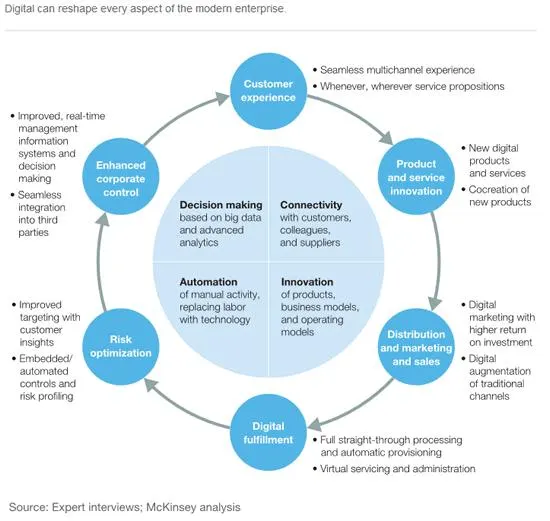
Digital reshapes every aspect of your business
Customers want faster results and they want things done. If they are not getting fast, desired results, they will switch to competitors who deliver better and faster outcomes through digital technologies across the customer journey. If you do not implement the right digital advertising and marketing strategies, you can lose a customer for good.
If you do not change the way you do business to adapt to this digital age, the new entrepreneurs who are digital innovators will soon overtake you, no matter how prestigious your organisation is.
How do you apply digital transformation to your business?
1. Reinvent your business model
Create a digital agenda for your company and evaluate how technology can be used to improve your business and stay ahead of competitors. Do not be afraid to take on your organisational structure, your processes and even your leadership model if that is what the desired results require.
2. Adapt to change, fast and efficiently
If you look around, every business is transforming itself to adapt to new technology and changes arrive every day. There is no respite. If you cannot move fast and efficiently, new startups and competitors will pass you quickly.

3. Form strategic partnerships
Since you cannot be an expert in every field or technology, forming a strategic partnership with companies that have domain expertise in areas that add value to your business process is a wise choice. Bringing in outside expertise for web development and digital marketing falls into this category.

4. Embrace digitisation
Since every business will be significantly transformed by digital technology, find ways to bring mobile, cloud, the internet of things, artificial intelligence and data analytics into your operation.

5. Invest in people and training
Learning and adopting new skills requires training. Training your existing staff to learn new skills is a smart investment, and there are low-cost ways to do it: sharing materials, using video resources and attending webinars.

Conclusion
We are going through a digital revolution, and those who prefer to bury their heads in the sand and do little or nothing will eventually be left behind. Competitors who focus on new initiatives and new ways of doing business will move ahead over time, no matter how big your company is or how many years of legacy you can point to.
On the visibility side of that transformation, work such as SEO and GEO consulting is one of the ways to turn a technology investment into commercial return.
Published: · Updated: · Author: Moon Workshop
Frequently Asked Questions
What is the difference between digital transformation and digitisation?
What does digital innovator mean?
Where should digital transformation start?
Do small businesses need digital transformation as well?
Related Articles
- Strategy6 min read
Advertising Abroad: From Market Selection to Campaign Setup
Expanding ads into new countries fails on operations more often than media. A framework for choosing markets, localizing and structuring campaigns.
- Strategy3 min read
Visibility or Security in the Digital World? The New Meaning of Data Privacy
The balance between visibility and security online: personal data, KVKK and GDPR responsibility, and how trust shapes brand value in digital marketing.
- Strategy3 min read
What Is Content Marketing? How Does It Increase Your Sales?
Content marketing builds trust by giving your audience real value, then turns that trust into sales. Content types, benefits and conversion steps.