
3 Reasons You Should Advertise on Facebook
Three solid reasons to advertise on Facebook: your audience is already there, targeting is granular, and custom audiences make remarketing work.
Contents
There are three core reasons to advertise on Facebook: your audience is already there, the targeting options are granular, and custom audiences make remarketing possible. As a modern marketer, it is easy to get caught up in the hustle of what everyone else is doing. Video production, blogging, email marketing, search marketing, SEO, guerrilla marketing — the options are close to endless.
The truth is that we cannot do it all. We have to choose which channels we put our heart and effort into, because if we put too little effort into every platform, the chances of seeing a successful return are slim. Still, one area dominates the way people spend their attention today: social media. We all know this, because you probably check your own feed several times a day.
Guess what? Your customers are doing exactly the same. That is not surprising, but it also does not mean you should spread your budget across every social platform out there. There is, however, one social network that is hard for marketers to ignore, and that is Facebook. Here is why.
1. Your audience is already on Facebook
Facebook is one of the largest social networks in the world by user count, and its user base spans a wide age range. For businesses, that makes it one of the biggest advertising opportunities after search.
The difference is this: on a search engine, the user is already looking for something, so demand exists. On social media the user is not searching; they see what appears in front of them. That makes Facebook a good environment for creating demand among people who are not yet aware of their need. For the wider context of how the channel fits in, see our article on digital advertising.
In practice this means: on search you can only reach people already looking for your product — a clear audience, but a limited one. On Facebook you can also reach people who have never heard of your product but match the profile. If you are introducing a new product category or offering a service where demand has not formed yet, that difference becomes decisive.
2. Facebook’s targeting capabilities are granular
Alongside many ad formats — video ads, single image and carousel, collection ads — the level of detail you can reach on the targeting side is considerable.
You can define your audience by:
- Demographics: age range, gender, language
- Location: country, city, a specific radius
- Interests: topics and pages followed
- Behaviours: device usage, purchase tendencies
- Connections: people who do or do not follow your page
These breakdowns let you dig deep and narrow the audience, or deliberately keep it broad and give the algorithm room to work. In practice both are worth testing: narrow targeting gives control, while broad targeting lets the system find users most likely to convert.
For targeting to pay off, the page the ad points to has to be consistent with the message. The landing page receiving campaign traffic matters as much as the targeting itself.
3. Try remarketing with custom audiences
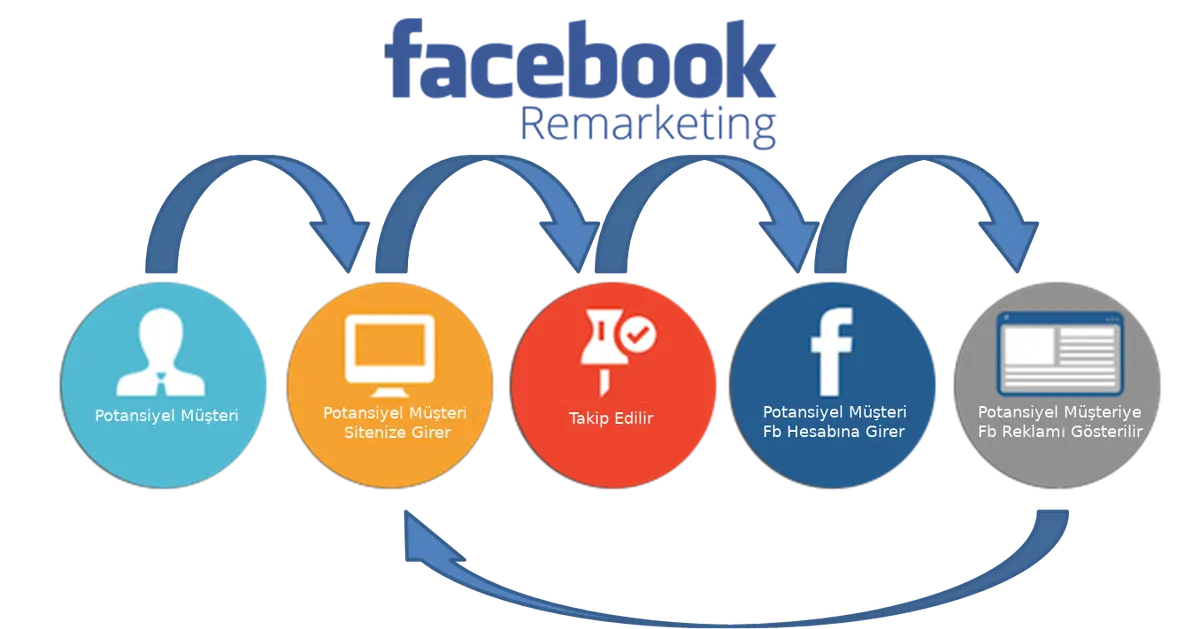
Remarketing is a powerful method because it targets an audience that has already visited your site. Those people are considerably more likely to have engaged with your products or offers than someone who has never heard of you.
Custom audiences can be built from:
- Website visitors, including people who viewed specific pages
- People who added an item to the cart without completing the purchase
- Your permission-based customer email list
- People who watched a share of your video or engaged with your ads
If you are already running paid search, a simple tactic follows: reach the users who came through Google Ads and did not convert with Facebook ads. The demand captured on search is then supported by a reminder on social.
Separating these audiences by source matters too. Someone who only viewed the homepage should not get the same message as someone who added an item to the cart and left: the first needs an introduction to the product, the second needs something that makes the decision easier. Excluding existing customers from the campaign also stops budget being spent repeatedly on the same person.
What to sort out before you start
A few preconditions decide whether Facebook ads work for you:
- Measurement. Without the pixel or the Conversions API in place, you cannot tell which ad actually produced a result.
- Enough creative variety. Testing with a single image leaves it unclear whether the outcome came from the creative or from the audience.
- A clear objective. Decide up front whether the campaign is chasing sales, form submissions or messages.
- Patience through the learning phase. Early-day data is unstable, and intervening too soon usually disrupts learning.
Facebook ads or search ads?
The question is usually framed wrongly, because the two channels do not do the same job. Search ads capture existing demand: the user is already looking, and you simply become visible at that moment. Facebook creates or revives demand; you appear while the user is not looking for you.
They are complements rather than alternatives. A common setup looks like this: search collects demand from brand and product queries, while Facebook both reaches new audiences and brings back people who visited the site without converting. How the budget splits depends on the sector, the price point and the length of the decision cycle; there is no single correct ratio.
With measurement, creative variety and a clear objective in place, Facebook becomes a strong channel that complements the demand search ads capture. If you would like to review your setup, take a look at our Meta ads service page.
Published: · Updated: · Author: Moon Workshop
Frequently Asked Questions
Which businesses are a good fit for Facebook ads?
How does targeting work in Facebook ads?
Why is remarketing so effective?
What should you prepare before launching Facebook ads?
Related Articles
- Meta Ads7 min read
Audience Targeting on Meta Ads After the Signal Loss
Detailed interest targeting no longer carries Meta campaigns. How broad targeting, Advantage+ audience, the Conversions API and creative variety took over.
- Meta Ads4 min read
What Is Instagram Advertising? Costs and Benefits
Instagram advertising is the paid way to publish sponsored content and reach a targeted audience. How its cost is set and what benefits it delivers.
- Strategy4 min read
How to Plan Seasonal Advertising Campaigns
What seasonal advertising campaigns are, when to run them, how to plan the calendar and channels, and which metrics actually show whether they worked.