
What Is SEM? Its Effects on Digital Marketing
SEM is the practice of gaining visibility on search engine results pages through paid ads. How it works, how it differs from SEO and why it matters.
Contents
SEM (Search Engine Marketing) is the practice of gaining visibility on search engine results pages through paid advertising. In today’s digital world it is one of the strategies brands use to increase their online visibility. SEM allows brands to appear in response to what users type into search engines such as Google.

What is SEM?
SEM, also known as paid search, is a paid digital advertising strategy used by advertisers to increase the visibility of a website, product or service on search engine results pages for targeted audiences. It is typically executed through platforms such as Google Ads and Microsoft Advertising.
SEM campaigns are triggered by users searching for specific keywords, and the ads are usually displayed at the top of the results, marked with an “Ad” label.
What does SEM do for a business?
An SEM strategy does not only increase website traffic. It also improves conversion rates by targeting users with high purchase intent directly. Campaigns offer detailed targeting options based on:
- Geographic location
- Device type
- User behaviour
- Time of day and day of week
This allows businesses to use their advertising budgets more efficiently and achieve measurable results.
Especially in highly competitive industries, where achieving high organic rankings through SEO may take a long time, SEM provides an effective solution for gaining visibility quickly. Payments are made on metrics such as cost per click (CPC) and cost per impression (CPM), which lets advertisers adopt a performance-based approach.
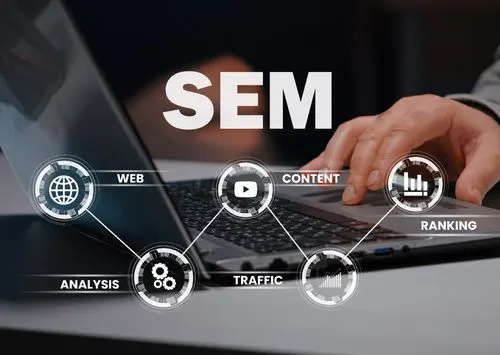
What are the effects of SEM on digital marketing?
SEM is a digital marketing strategy that aims to increase website visibility through paid advertisements on search engines. Although it is often confused with SEO, SEM runs on an advertising budget and delivers fast results — it is essentially the search-network application of the PPC model.
On search engines like Google and Bing, when users search for a keyword, the listings displayed at the top of the results with the “Ad” label fall under SEM. As a result, potential customers are more likely to click these first, driving more traffic to the website.
Which platform is used?
Google Ads is the most widely used platform in the SEM field. Google has been offering this service since 2000 and generates significant revenue from digital advertising. Through SEM, advertisers can quickly connect their products and services with users who are actively searching for them.
Should you choose SEM or SEO?
SEO is a long-term, organic strategy, while SEM is ideal for companies looking for immediate results. Using both together provides the most effective outcome in digital marketing: SEM brings visibility from day one, and SEO builds durable traffic over time.
Moon Workshop treats the two approaches as one engagement in search engine marketing work, building campaign structures around how users actually search so that click-through rate and conversion can be measured on a consistent basis.
Published: · Updated: · Author: Moon Workshop
Frequently Asked Questions
What is the difference between SEM and SEO?
How do SEM ads appear in search results?
Which platforms are used for SEM?
Who is SEM suitable for?
Related Articles
- Google Ads7 min read
Performance Max Campaigns: When to Use Them and How to Optimize
Performance Max runs across every Google inventory from one campaign. When it fits, how to structure asset groups, and which levers control it.
- Google Ads6 min read
YouTube Ad Formats and Which Goal Each One Serves
Skippable, bumper, in-feed and Shorts ads each serve a different objective. How to match YouTube ad formats to goals, creative and measurement.
- Google Ads3 min read
What Is PPC (Pay-Per-Click) and Why Is It Important?
What the pay-per-click model is, how fixed-rate and bid-based pricing differ, why keyword selection decides results, and the advantages of PPC.